
Beirut Arab University Public Lectures and Community Educational Events
SDG 4 Quality Education
THE Impact Rankings indicator 4.3.2 | Beirut Arab University, Lebanon
Response to the indicator
Yes. Beirut Arab University (BAU), as an institution, hosts public lectures and community educational events through its faculties, the Deanship of Graduate Studies and Research, the Human Rights Center and the Student Activities Department. Its provision includes both recurring programmes and individual events. The evidence establishes access beyond BAU’s enrolled students: school pupils, prospective postgraduate students from other universities, community organisations, nursery representatives, professional audiences and members of the public participate in university activities.
Category | Response | Basis for classification |
|---|---|---|
Ad hoc | Yes | Individual public lectures and separately organised community education days, cultural events and school learning activities. |
Programmed | Yes | Annual science fairs, the numbered graduate open house series, recurring NGO fairs and annual public music and drama performances. |
BAU’s Music Club and Drama Club explicitly state that their performances are open to the public and free of charge. These published access arrangements complement dated university event records that show external participation on campus. Events for particular community groups are identified by their audience below; participation by school pupils or professionals does not imply unrestricted walk-in access for every event.
Evidence: Music Club public performance arrangements
Evidence: Drama Club public performance arrangements
The following evidence explains who organised each activity, when it took place, whom it served and how it contributes to learning beyond formal university enrolment. Physical campus events provide the principal evidence. Earlier online editions are identified separately as continuity of the same recurring programmes.
Programmed science and community learning events
Third Annual Science Fair at Beirut Campus in 2023
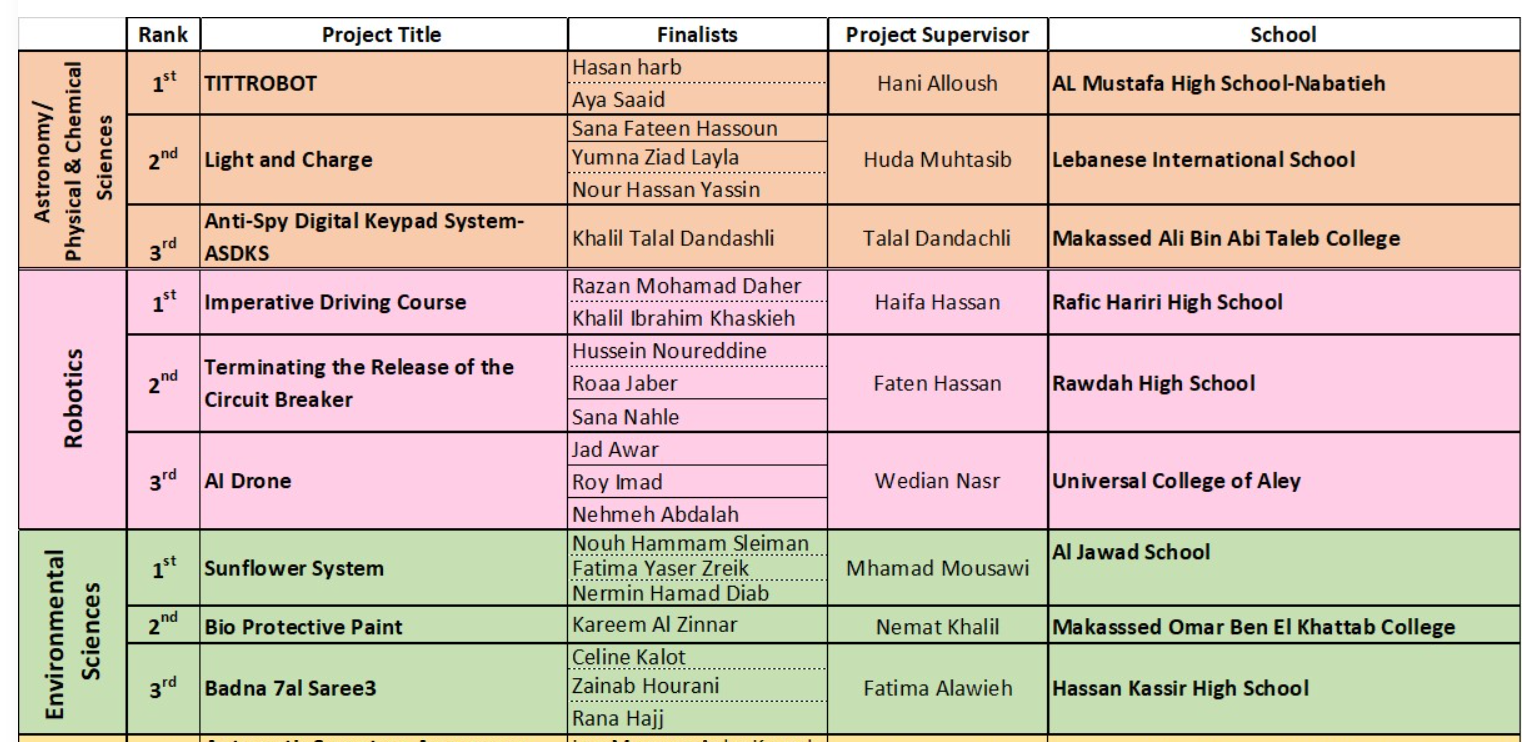
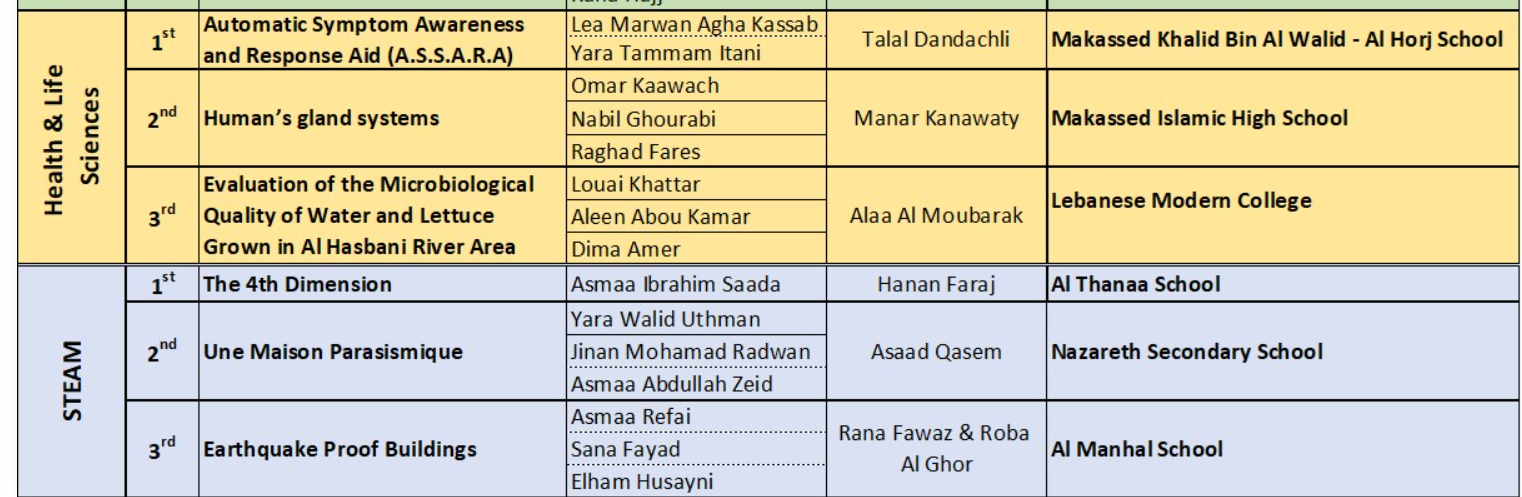
On 18 March 2023, the Faculty of Science organised BAU’s Third Annual Science Fair at Beirut Campus under the university president’s patronage. The university invited science enthusiasts from schools across Lebanon to present projects, meet peers and interact with professors and science experts. More than 230 high school students from 29 schools participated, presenting 90 projects across six categories, including environmental science, health and life sciences, STEAM and robotics. External experts joined BAU academics in assessment and question-and-answer discussions. BAU’s Astronomy Club, ASME student section and e-Health and Telemedicine Club also contributed demonstrations. Faculty volunteers and university administrative staff supported delivery. This is a programmed community educational event: it is explicitly the third annual edition, hosted on university premises and designed for learners outside BAU. Its educational value comes from scientific inquiry, project explanation, demonstrations and direct discussion with specialists.
Evidence: BAU Third Annual Science Fair event record
BAU 3rd Annual Science Fair
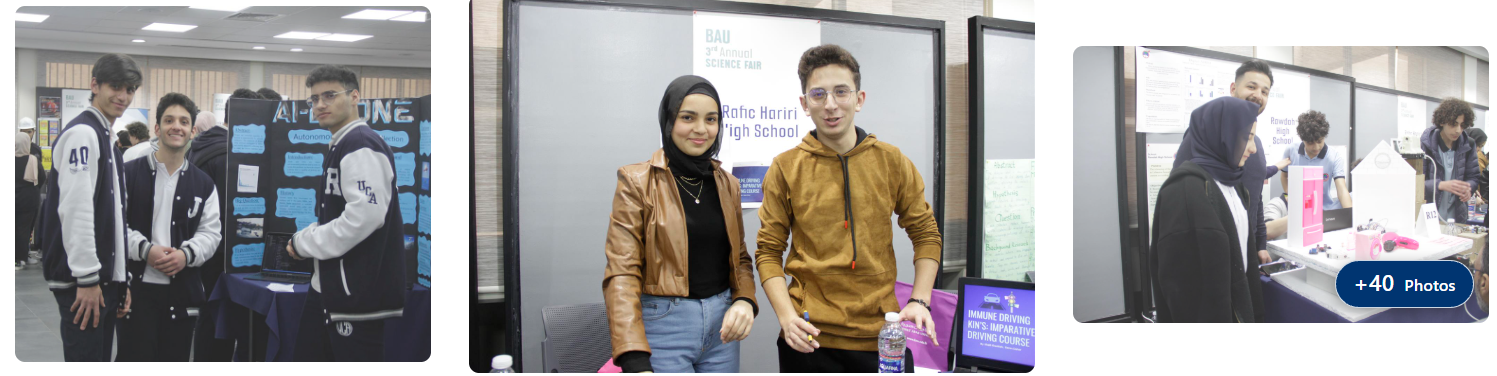
Under the Patronage of the President of Beirut Arab University, Prof. Amr El Adawi, the Faculty of Science organized its BAU 3rd Annual Science Fair on March 18, 2023 in Beirut Campus. It aims to promote an appreciation for scientific principles and methods in the youth of Lebanon, encourage and foster youth advancement in science and technology, recognize schools’ efforts in the development of scientific minds and promoting creativity, teamwork, and independent thinking among students. The fair opens door for all science enthusiasts from across Lebanon’s schools to present their projects, meet their peers with common interests, interact one-on-one with university professors and science experts and engage in scientific discourse to further explore their topics.
Over 230 high school students from 29 schools across Lebanon participated this year and competed with a total of 90 projects submitted in 6 different categories and were distributed as follows: 2 projects in Astronomy, 14 projects in Applied Physical and Chemical Sciences, 15 projects in Environmental sciences, 25 projects in Health & Life sciences, 21 in STEAM and 13 in Robotics. The projects were meticulously assessed by a curated panel of judges that visited the schools’ booths, listened to the students’ presentations, and evaluated them in Q&A session. The judging panel included external members: Dr. Ahmad Chaalan (Professor of Astrophysics, Lebanese University), Dr. Rabih Baalbaki (President of Education Technology – EdTech- Syndicate), Dr. Jihad Abboud (President of chemists’ association in Lebanon), Mr. Jamal Azzam (Ministry of Education), Dr. Nizar Hani (Director of Shouf Biosphere reserve), Dr. Rami Oweini (Director of research Lab, AUH), Mr. Sami Sleem (CEO of IDS company), Mr. Mostafa Soukarieh and Mr. Hasan Kamar (President and vice-president of the Association of Physics Teachers in Lebanon, respectively) along with internal BAU members from the Faculty of Health Sciences, Dr. Said Shamieh, from the Faculty of Engineering, Dr. Amira Zaylaa, and from the Faculty of Science: Prof. Mahmoud Khalil, Dr. Mohammad El-Dakdouki, Dr. Jamila Borjac, Dr. Dalia El badan, Dr. Rana Hajj, Dr. Bilal Nakhal, Dr. Khouloud Habanjar, Dr. Layal Abu Daher, Dr. Rabih Damaj, Dr. Julie Abu Daher, Dr. Wasila Kanawati, Dr. Nour Ghouch, Dr Noura Abou Zeinab and Mrs. Mariam Rabaa. The projects were assessed based on: Scientific Method, Innovation and Creativity, Technical Proficiency, Communication, Comprehension, Impact and Relevance. The Top 3 projects in each category were first selected, and top 4 overall projects were then awarded BAU scholarships in Science Majors. It is worth mentioning that BAU student clubs, namely BAU Astronomy Club, American Society for Mechanical Engineers (ASME) – BAU student section, and e-Health and Telemedicine club have also participated in this fair. Some of their projects included a prototype for detecting exoplanets and a Mars rover that replicated the features and functions of a real-life Mars rover. By their outreach to younger students through the science fair, they met their invaluable role in fostering a love of science and inspiring the next generation of scientists and explorers.
Following the judging session, the awarding ceremony started with welcoming remarks of the head of BAU-SF organizing committee, Dr. Ghada Khawaja, then followed by the inspiring words from the Dean of the Faculty of Science, Prof. Ramadan Awad, who emphasized on the variety and originality of the projects that were displayed in the fair. He stated, ‘it’s enormously uplifting to be in the presence of so many young talents and creative minds who present such a great hope for the future of Lebanon.”
Dr. Khawaja addressed the students and said, “we see the results of students drawing their inspiration from the current issues and challenges in Lebanon… while each project is distinct and unique, they are all united by a great spirit of innovation, a creative and questioning approach, and an original thinking that always defines the true scientist.” She continued, “may I take this opportunity here to pay tribute to your schools, teachers, and science coordinators. It’s their encouragement, guidance, and assistance, especially in difficult times like these, that enables you to bring together this great display of scientific wonder.” In her speech, she also acknowledged the tremendous cooperation and efforts of BAU staff body, administrators, BAU-SF organizing committee members and the amazing group of volunteers from the Faculty of Science who have been such a great support and have ensured that the fair is up to the mark. She also thanked the gold sponsor ElectroSlab for supporting the fair and the bronze sponsors, Pepscio and Aquafina for sponsoring the refreshments.
Then the top three projects per category were announced on stage in the presence of the Dean of the Faculty and the respective jury panel, followed by the Top 4 winning teams of BAU scholarships.
The Top winning teams of BAU scholarships:
o First place: Imperative Driving Course, project by Razan Daher & Khalil Khaskieh, Rafic Hariri High School
o Second place: Automatic Symptom Awareness and Response Aid (A.S.S.A.R.A), project by Lea Agha Kassab & Yara Itani, from Makassed Khalid Bin AL Walid – Al Horj School College
o Third place: Sunflower System, project by Nouh Sleiman, Fatima Zreik & Nermin Diab, from Al Jawad School
o Fourth Place: Earthquake proof buildings, project by Asmaa Refai, Sana Fayad, Elham Husayni, from Al Manhal School * the fourth position prize wasn't determined based on the grades, unlike the top three projects. it was bestowed upon the project for its innovative approach in addressing real-time problems.
Winners of the Top projects benefit from Scholarships in Science Majors: 70% Scholarships on tuition fees for Math, Physics and Chemistry Majors, 40 % Scholarships on tuition fees for Computer Science, Biology and Biochemistry majors. *Scholarships are renewable for each undergraduate year provided that the student maintains a minimum cumulative 85% average.
The finalists were awarded a Certificate of Distinction in recognition of their outstanding performance and were granted by the Student Activities Department a one-month free membership in one of BAU sports’ academies. Furthermore, the panel of judges were awarded certificates of appreciation in recognition of their time and efforts in this competition. Dr. Khawaja concluded the awarding ceremony, “Congratulations for all the participants, finalists, and winners! The outstanding quality of the projects presented at BAU 3rd Annual Science Fair, made indeed this competition much interesting!”
Earlier science fair editions in 2021 and 2022
The annual reports document the programme’s earlier delivery. On 12 April 2021, BAU held a Virtual Science Fair for High School Students, encouraging schools’ scientific learning, creativity, teamwork and independent thinking; the top three teams received scholarships. On 16 May 2022, the Faculty of Science organised the Second Annual Virtual Science Fair for High School Students. Secondary pupils from schools across Lebanon submitted 24 video projects in astronomy, environmental sciences, health and life science, and STEAM. These online editions establish continuity before the documented physical fair in 2023.
Evidence: BAU Annual Report 2021 (PDF page 20, printed pages 38 and 39)
Evidence: BAU Annual Report 2021 to 2022 (PDF page 21, printed pages 40 and 41)
Eighth NGO Fair at Beirut Campus in 2024
BAU’s Human Rights Center, with the Lebanese National Commission for UNESCO, organised its Eighth NGO Fair at Beirut Campus on 29 April 2024, from 10 am to 3 pm. The theme was Bridging Gaps, Celebrating Human Rights, and Advancing the SDGs. Approximately 20 NGOs participated, alongside UNODC Lebanon and BAU’s UNESCO, DSC and Red Cross clubs. The event also welcomed secondary pupils from three UNESCO Associated Schools: Heritage College, Hariri High School 3 and Makassed Omar Bin Al-Khattab College. The fair brought external community organisations and school learners onto campus to explore activism, human rights and sustainable development. Its numbered eighth edition supports classification as a recurring programme. The documented access is participation by NGOs and visiting school groups, rather than a statement of universal walk-in admission.
Evidence: BAU Human Rights Center record of the Eighth NGO Fair
Evidence: Lebanese National Commission for UNESCO confirmation of the fair
BAU 8th NGO Fair Bridging gaps celebrating rights and advancing the SDGs
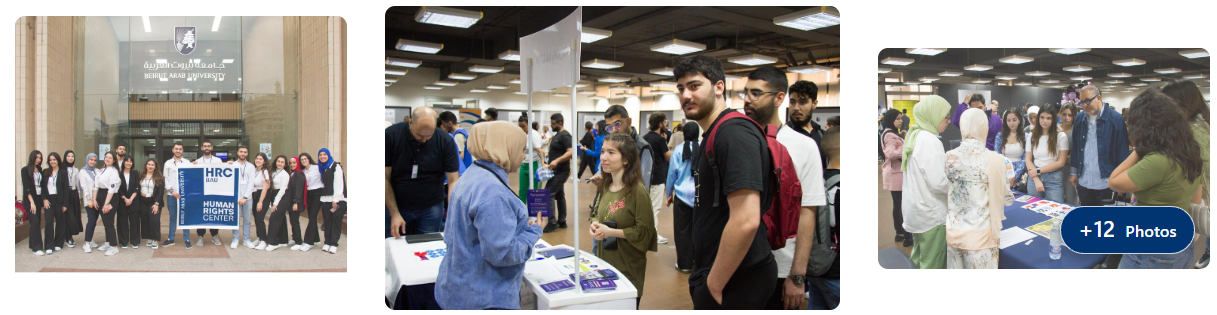
The 8th NGO Fair organized by the Human Rights Center in collaboration with the Lebanese National Commission for UNESCO took place on Monday 29 April 2024, from 10 am to 3 pm at Beirut campus. It served as a crucial platform for students to explore various forms of activism in Lebanon. This year’s theme “Bridging Gaps, Celebrating Human Rights, and Advancing the SDGs” aimed to highlight the importance of human rights and sustainable development goals, with the participation of approximately 20 NGOs along with the United Nations Office on Drugs and Crime – Lebanon (UNODC), as well as the BAU UNESCO Club, DSC Club and Red Cross Club.
And as part of the collaboration with the Lebanese National Commission for UNESCO, secondary cycle students from 3 UNESCO ASPnet schools attended the Fair: Heritage College, Hariri High School 3, and Makassed Omar Bin Al-Khattab College.
Programmed open houses and public cultural learning
Ninth Graduate Studies Open House in 2025
The Deanship of Graduate Studies and Research organised BAU’s Ninth Graduate Studies Open House on 29 April 2025. Its published invitation offered registration to interested prospective students, an overview of programmes and facilities, information about admission requirements and opportunities to meet faculty members. The university’s event report confirms participation by BAU students and attendees from other universities. Visitors discussed diploma, master’s and doctoral options across BAU’s ten faculties and explored academic and career pathways with faculty representatives. The public invitation and external attendance establish educational access beyond the university’s own enrolled population. As the ninth edition, the event belongs to a programmed series. The record identifies the university as host; the text does not specify a campus or an admission fee.
Evidence: BAU Ninth Graduate Studies Open House invitation
Evidence: BAU report confirming external participants
Graduate Studies Open House An Orientation Day at Beirut Arab University
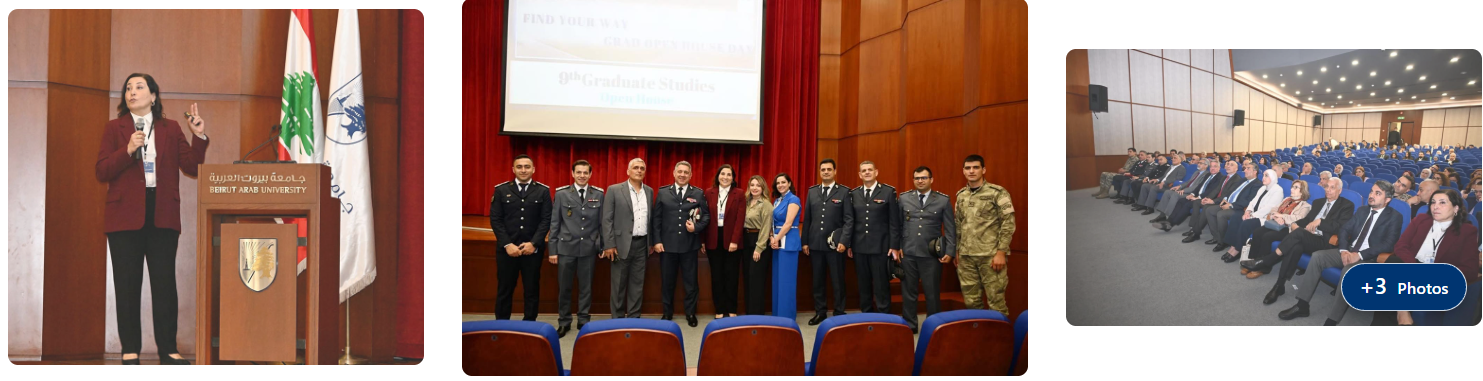
The Deanship of Graduate Studies and Research at Beirut Arab University (BAU) organized its 9th Graduate Studies Open House, an orientation day designed to introduce prospective students to the university’s graduate programs. The event was attended by Dr. Ammar Houry Chairman of the Board of Trustees of Bir Wal Ihsan and BAU’s Board of Trustees, Professor Wael Nabil Abdel Salam University President, Dr. Omar Houri BAU Secretary General, along with university deans, representatives from diplomatic and military authorities, presidents of liberal professions, bank managers, hospital directors, and a large gathering of students.
The Open House served as a platform to guide BAU students and attendees from other universities on the doctoral, master’s, and diploma programs offered across the university’s ten faculties. Participants had the opportunity to engage directly with faculty representatives, explore available specializations, and gain insights into academic and career pathways.
Professor Hania Nakkash, Dean of Graduate Studies and Research, highlighted BAU’s key achievements, including its top national ranking among Lebanese universities (according to the “THE World University Rankings”). She also emphasized the university’s international institutional accreditation, faculty-specific accreditations, and the scholarships available to students. These accomplishments, she noted, enhance academic and research excellence, ensuring BAU remains at the forefront of scientific advancement and maintains the highest educational standards.
Additionally, faculty representatives showcased their graduate programs and services, detailing how these offerings prepare students for success in their professional careers.
BAU s 9th Graduate Studies Open House
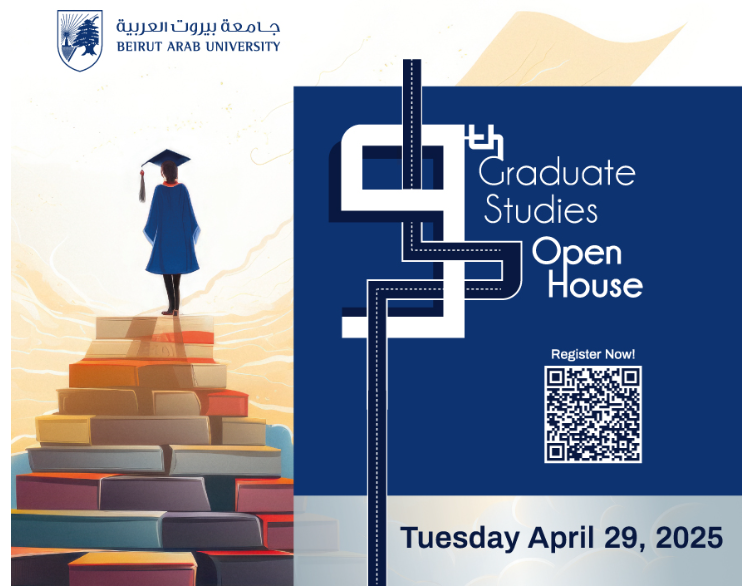
Find Your Way – Grad Open House Day
BAU's 9th Graduate Studies Open House
Beirut Arab University invites you to its 9th Graduate Studies Open House.
Discover our wide range of graduate programs across our 10 Faculties, and get the information you need to take the next step in your academic journey.
Event Highlights:
Overview of graduate programs and facilities
Admission requirements
Meet Faculty members and ask your questions
Join us and *find your way* to a successful future with BAU!
For details:
Tel: +961 1 300110 Ext: 2586-2513
E-mail: gsadmin@bau.edu.lb
For Registration:https://docs.google.com/forms/d/e/1FAIpQLScnJt2JKOF05A4nL0KV4SpymrORkspmhxVIZr3FpizEyM7pVw/viewform
Seventh Graduate Open House invitation in 2023
BAU’s Seventh Graduate Open House announcement, dated 14 March 2023, invited interested students to learn about graduate programmes across ten faculties, facilities, admission requirements, financial aid and support services. It described a presentation followed by information stands where visitors could ask questions and meet relevant faculty members. This is further evidence of a recurring, publicly advertised educational orientation programme. The date is the date on the announcement; the page text does not establish a separate delivery date.
Evidence: BAU Seventh Graduate Open House announcement
7th Graduate OPEN HOUSE
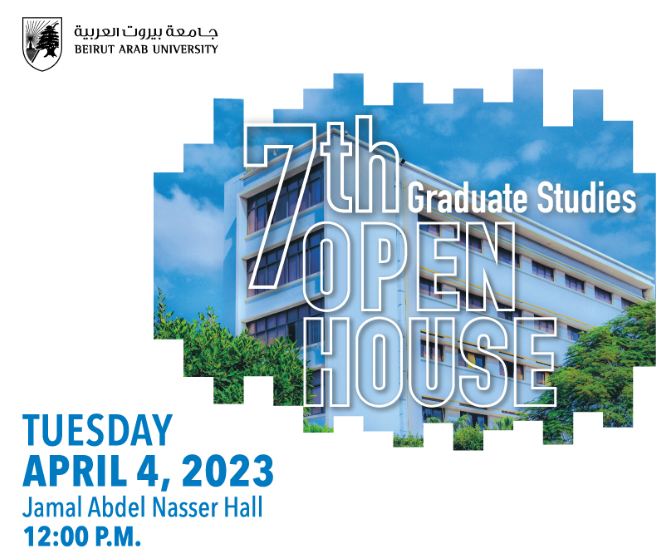
Seize the opportunity at Beirut Arab University to Obtain your Diploma / Master / PhD degree.Join us this year in the 7th Graduate “Open House” to get to know all the graduate programs offered by BAU 10 Faculties, along with the facilities, all the admission requirements, financial aid, support services and other relevant information.
The event will include a brief presentation about BAU programs and facilities followed by a series of information stands where all interested students can ask questions and meet with the relevant Faculty members.
SAVE THE DATE !!!!!
For further information:
Tel: +961 1 300110 Ext: 2605
E-mail: gradstudies@bau.edu.lb
Fifth and Sixth Virtual Graduate Open Houses in 2021 and 2022
BAU’s Annual Report 2021 records the Fifth Virtual Graduate Open House on 5 May 2021, using a live Zoom information session to explain graduate programmes, admission requirements and financial aid. The following annual report records the Sixth Virtual Open House on 6 June 2022, also delivered through Zoom. These are online editions of the programmed open house series, supporting continuity of educational information during a period when remote participation was important. They are presented as virtual access, separately from physical campus events.
Evidence: BAU Annual Report 2021 (PDF pages 7 and 20, printed pages 12 and 13 and 38 and 39)
Evidence: BAU Annual Report 2021 to 2022 (PDF page 21, printed pages 40 and 41)
Graduate Studies 5th Virtual OPEN HOUSE
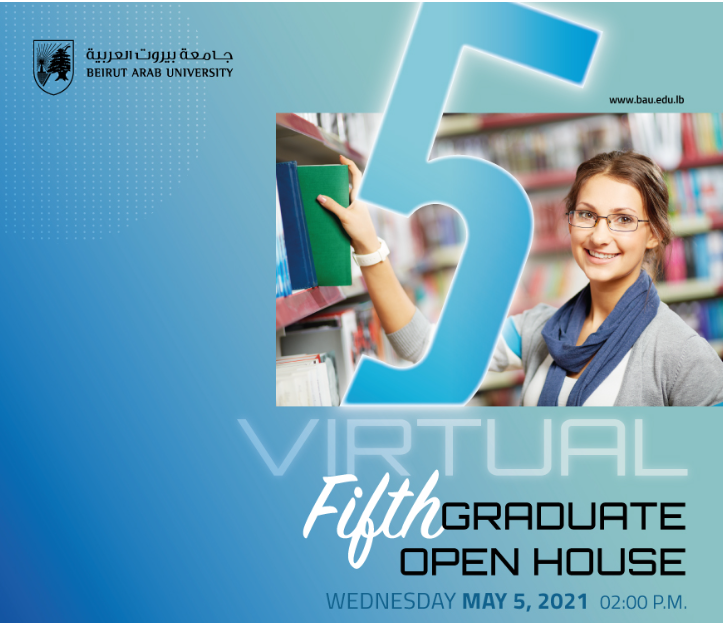
Seize the opportunity at Beirut Arab University to Obtain your Diploma / Master / PhD degree.
Join us this year in the 5th virtual Graduate Studies “Open House” and decide what is the best career challenge.
Tune in through a Live information session on May 5, 2021, at 2:00 P.M. to get to know all the graduate programs offered by its 10 Faculties, along with the facilities, all the admission requirements, financial aid and other relevant information.
Virtually Via ZOOM
Meeting URL : https://zoom.us/j/98731279318
Meeting ID: 987 3127 9318
This session will include a brief presentation about BAU programs and facilities followed by a breakout zoom rooms where all interested students can ask questions and meet with the relevant Faculty members.
SAVE THE DATE !!!!!
Graduate Studies 6th Virtual OPEN HOUSE
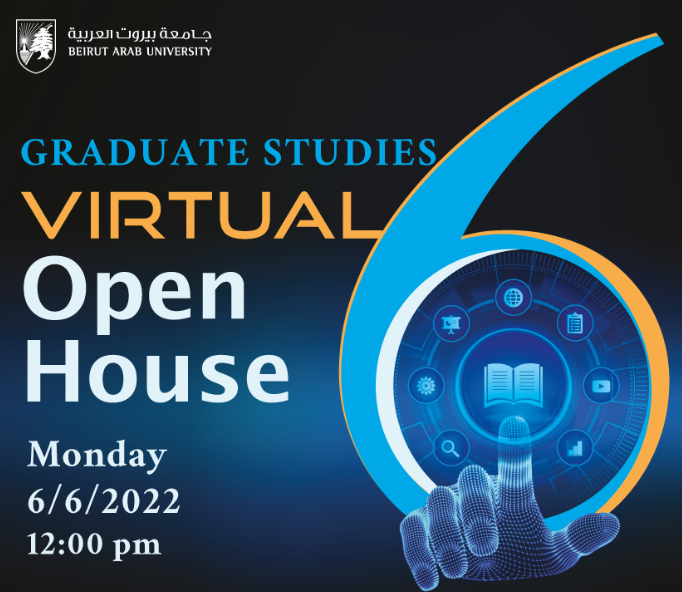
Seize the opportunity at Beirut Arab University to Obtain your Diploma / Master / PhD degree.
Join us this year in the 6th virtual Graduate Studies “Open House” and decide what is the best career challenge.
Tune in through a Live information session on June 6, 2022, at 12:00 P.M. to get to know all the graduate programs offered by its 10 Faculties, along with the facilities, all the admission requirements, financial aid and other relevant information.
Virtually Via ZOOM
Meeting URL : https://zoom.us/meeting/93510703699
Meeting ID: 935 1070 3699
This session will include a brief presentation about BAU programs and facilities followed by a breakout zoom rooms where all interested students can ask questions and meet with the relevant Faculty members.
SAVE THE DATE !!!!!
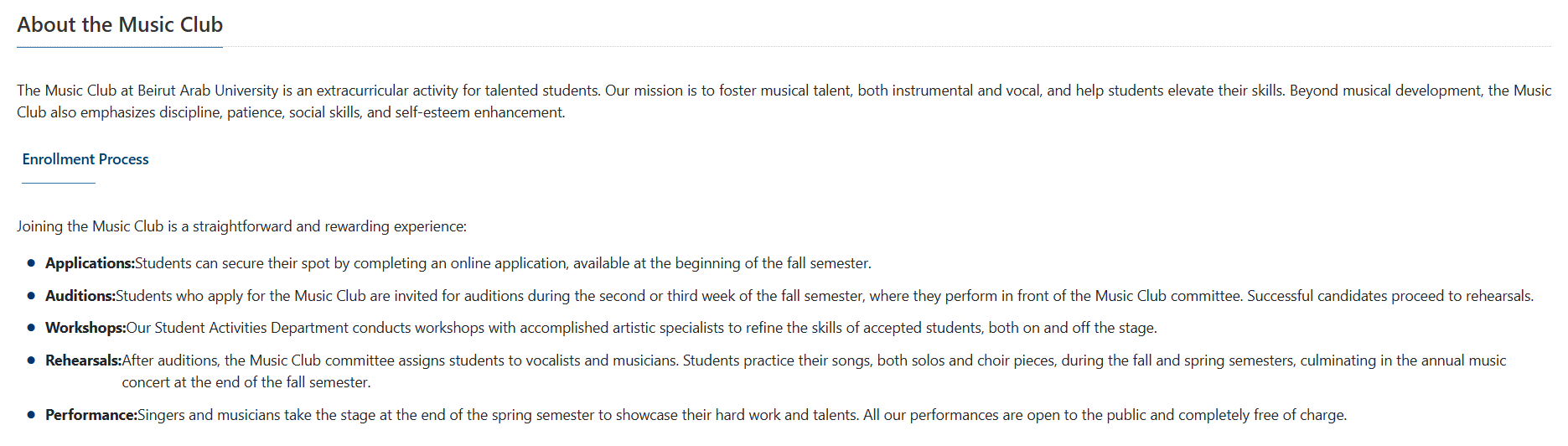
Annual Music Club performances open to everyone
The Music Club’s published arrangements describe an annual cycle of applications, auditions, specialist workshops and rehearsals leading to public performances. The Student Activities Department supports students’ preparation with artistic specialists. BAU explicitly makes its Music Club performances open to the public without charge. This provides direct evidence of programmed public access to university cultural activity. Community audiences can experience live music and students’ artistic work, while the university provides the organisational framework for recurring performances. The club page is an undated standing programme description; it does not provide a dated performance count for 2026.
Evidence: BAU Music Club programme and free public access
Annual Drama Club performances open to everyone
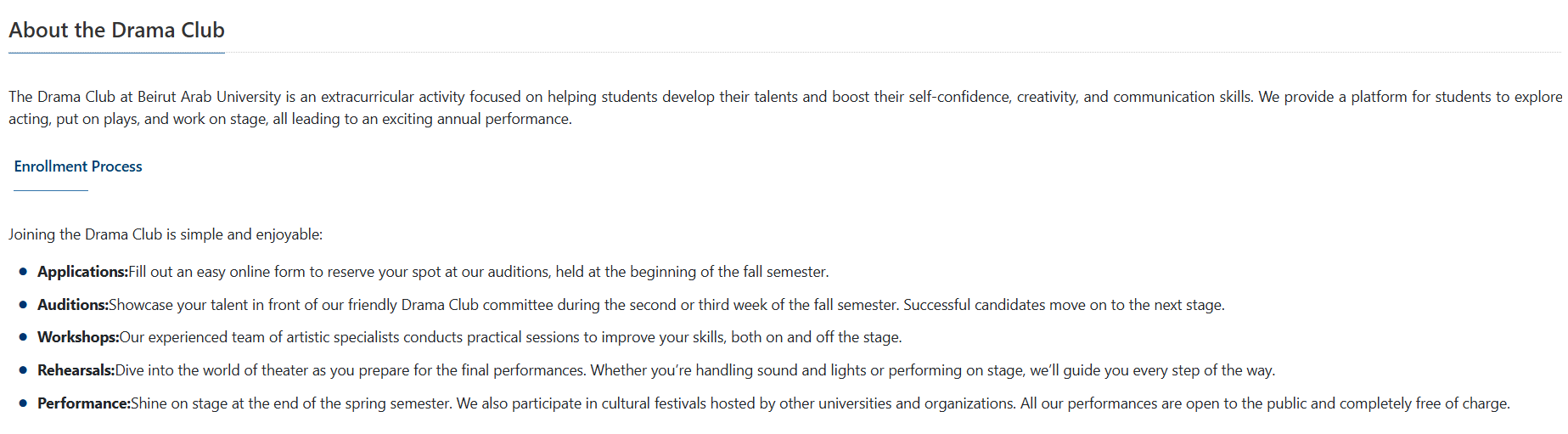
BAU’s Drama Club similarly publishes a structured annual programme, beginning with fall applications and auditions and progressing through specialist workshops and rehearsals to a spring performance. The university states that all performances are open to the public and completely free of charge. The programme enables the wider community to engage with theatre and student creativity, while students develop acting, communication and production skills. It therefore supplies clear evidence of programmed public cultural participation under university organisation. The standing description establishes the access arrangement and annual structure, rather than dates or attendance totals for individual recent productions.
Evidence: BAU Drama Club programme and free public access
Ad hoc public lectures hosted by the university
Public lecture on architectural simulation in 2022
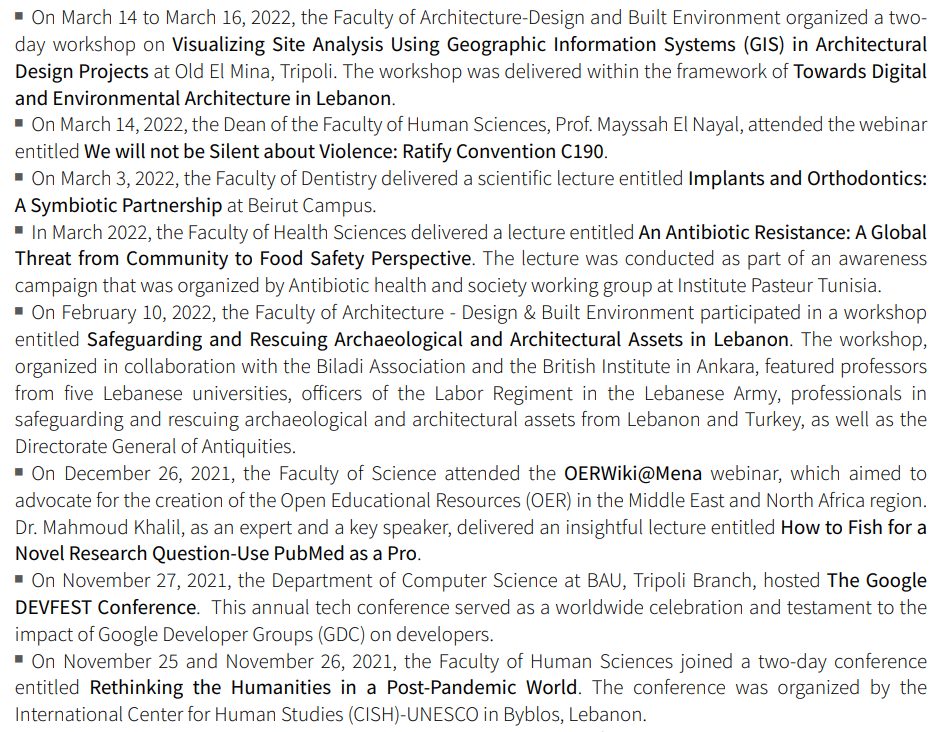
On 23 March 2022, BAU’s Faculty of Architecture Design and Built Environment organised a public lecture on The Integration of Building Performance Simulation in the Design Process at Tripoli Branch. The annual report places the activity within its Simulation-Based Learning Methods work and explicitly calls it a public lecture. It demonstrates a faculty-hosted event sharing specialist architectural knowledge in a public educational format. This dated lecture is classified as ad hoc; the cited record does not establish an annual series, attendance total or admission charge.
Evidence: BAU Annual Report 2021 to 2022 (PDF page 12, printed pages 22 and 23)


Rashid Karami International Fair public lecture in 2023
On 13 November 2023, the Faculty of Architecture Design and Built Environment hosted the public lecture Rashid Karami International Fair Modern World Heritage in Danger What Next at Tripoli Branch. Dr. Wassim Naghi, President of the Niemeyer Foundation for Heritage, delivered the lecture, organised by BAU Associate Professor Khaled El-Daghar. Partners included Tripoli and Zgharta Ehden municipalities, the United Cities Association of Lebanon and French urban planning organisations. Municipal representatives contributed to the event, and an audience discussion considered the fair’s future. The lecture shared knowledge of architectural heritage, conservation and regional development with external stakeholders. BAU’s original report states that the fair had joined the UNESCO World Heritage List in January 2023. The event supplies explicit public lecture evidence at a university campus, with community and local government participation.
Evidence: BAU original report of the Rashid Karami International Fair public lecture
Rashid Karami International Fair Modern World Heritage in Danger What s Next Public Lecture at Beirut Arab University
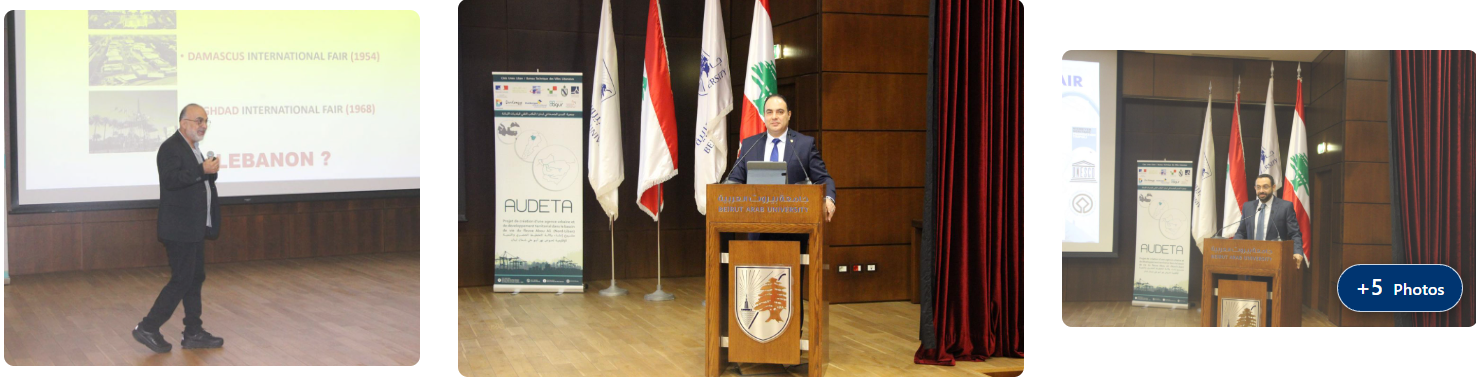
The Faculty of Architecture - Design and the Built Environment at Beirut Arab University, Tripoli Branch, held a lecture on the Rashid Karami International Fair - Modern World Heritage in Danger - What Next!, by the President of the Niemeyer Foundation for Heritage in Tripoli and Professor of Architecture at the Lebanese University, Dr. Wassim Naghi, and organized by Dr. Khaled El-Daghar, Associate Professor of Architecture at the Faculty, within the “Cooperation Project in the Field of Urban Management and Regional Development”, in partnership with the United Cities Association of Lebanon / Technical Office of Lebanese Municipalities, the Municipality of Tripoli, the Municipality of Zgharta/Ehden, and in cooperation with the Union of Municipalities of Dunkirk and the Agency for Urban Planning and Development for the Flanders Region - Dunkirk (AGUR) - France, the French National Union of Urban Planning Agencies (FNAU), and the Port of Dunkirk with support of the French Ministry for Europe and Foreign Affairs.
At the beginning, the Associate Professor at the Faculty, Dr. Khaled Al-Daghar, welcomed the audience, emphasizing the joint cooperation between universities, municipalities, governmental and non-governmental institutions and civil society organizations to support and build a common strategic vision for development plans and manage the development of new local development projects.
The Director of Tripoli Branch, Dr. Hani Shaarani, also noted that the University works with all local and international partners to achieve social, economic, cultural and urban development. The Rachid Karami International Fair complex is a national and global wealth that shall be preserved and continuously developed because it is a unique investment opportunity. It can also play an active role in the development of the region if is exploited effectively.”
The Mayor of Tripoli, Engineer Ahmed Kamareddine, spoke about the framework of the Rachid Karami International Fair Competition, which is part of the Tripoli Municipality's cooperation project with the Municipality of Zgharta/Ehden and French partners through the establishment of the Urban Planning and Regional development Agency for Abou Ali River Basin(AUDETA).
Mr. Ghassan Tayoun, a member and representative of the Zgharta/ Ehden Municipality Council, then reviewed the Agency's plan and objectives, which began in 2017 with the assistance of French planning agencies, taking into account all the development capabilities of the areas on the Abou Ali River Basin, which has an umbrella symbol and expands along 480 square kilometers.
Dr. Wasim Nagy started his lecture with a historical overview and brief definitions about the idea of Lebanon's permanent international exhibition in Tripoli, which began at the end of the 1950s. He, then, followed it by a comprehensive explanation of all stages and the impact of the civil war on the fair in general and the subsequent disruption of Lebanon's decision makers during the attempt to reinvigorate what has become known since the mid-1990s as the Rashid Karami International Fair in Tripoli.
Dr. Nagy continued that the death of architect Oscar Niemeyer in 2012 was the starting point for ongoing outreach and awareness activities and campaigns with a group of heritage professionals and activists to demonstrate the cultural value of the fair and its economic role, culminating in its inclusion on the UNESCO World Heritage List in January 2023.
At the end, a discussion was moderated with attendees about their vision for the Rashid Karami International Fair as a promising facility for Tripoli in specific and for Lebanon and the region in general.
Zero Waste Is Not Science Fiction lecture in 2023
BAU hosted engineer Ziad Abi Chaker’s Zero Waste Is Not Science Fiction lecture on 28 February 2023. The university’s Public Relations and Communications Director introduced the event, which was attended by university representatives, a representative of the Minister of Culture, students and an interested audience. The lecture explained waste sorting, recycling and the recovery of materials, including conversion of organic waste to agricultural fertiliser and uses for recycled plastic. Attendees discussed the issues with the speaker. This is an ad hoc educational event hosted by BAU on a topic of direct community interest. The report establishes participation beyond a formal classroom, but does not explicitly state universal admission conditions, an entrance fee or a particular campus; it should therefore complement the clearly designated public lectures and free public performances.
Evidence: BAU original Zero Waste lecture report
Zero Waste Is Not Science Fiction Ziad Abi Chaker at BAU
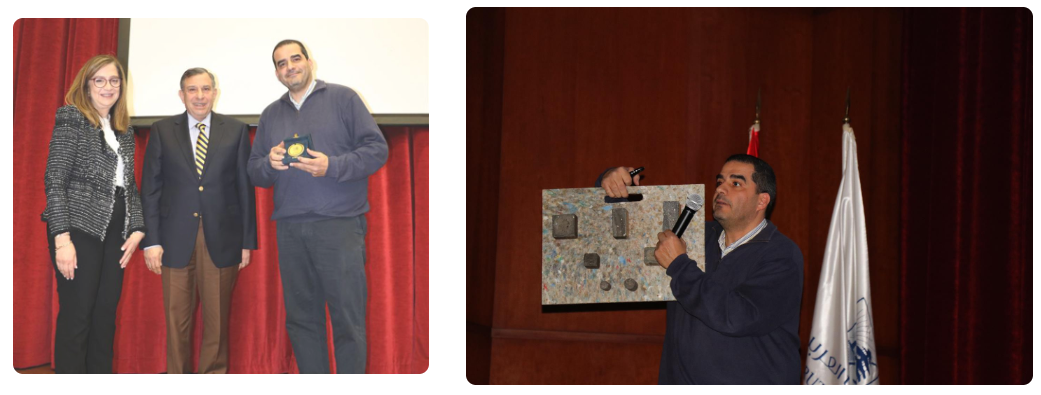
Beirut Arab University hosted a lecture for the Engineer Ziad Abi Chaker entitled "Zero Waste is Not Science Fiction", owing to the fact that Lebanon has been dealing with a waste crisis since 2015, and how we may achieve "zero waste" by recycling and using trash in the industrial realm.
The lecture was attended by the Minister of Culture, H.E. Mohammad Wissam Mortada, represented by Dr. Nizar Daher, the Chairman of the University’s Board of Trustees, Dr. Ammar Houri, the President of the University, Prof. Amr Galal El-Adawi, the Vice President for Medical Sciences, Prof. Essam Osman, the Secretary General of the University, Dr. Omar Houri, the Deans of the University, and a crowd of students and interested audience.
After the Lebanese national anthem, followed by the university’s anthem, Mrs. Zina Ariss, Director of Public Relations and Communications, introduced the lecturer Mr. Ziad Abi Chaker, saying, "Our crises in Lebanon do not end, and the most serious of them is their harm to public health first, the environment second, and civilization third. The worst part of the trash situation in our country, Lebanon, is that the government is not taking any action, despite the fact that there are solutions out there for those who have the expertise and the will to implement them.”
Mr. Ziad then said, “The title "Zero Waste" has become a necessity in our country today, where we are working on spreading awareness about how to recycle and treat waste. There are many communities that preach the so-called zero waste, this is not beyond our reach as Lebanese people, and it would be wrong to resort to burying or burning waste, instead, an infrastructure must be created to recycle it."
Furthermore , "Today, waste is not only household waste, either organic or not, but construction waste, medical and pharmaceutical waste, as well as electronic waste. The scope of what societies consume and throw away is now very large, and this is an issue that is no longer acceptable."
Mr. Abi Chaker continued, “Any plan that adopts the principle of zero waste separates these categories from each other, as it’s known very well that their treatment techniques are different and cannot be placed all within one factory, and the "zero waste" plan for household waste requires that it be transported without resorting to compaction, which prevents the mixing and breaking of what is dangerous with the rest of the existing materials, considering that plastic materials are of economic value because they last long and are not affected by natural factors, so they are recycled and converted into solid structures that use bases for installing solar panels, and sewage covers.”
Mr. Abi Chaker urged the establishment of waste sorting centers and encouraging citizens to do so in their homes, as these materials have high economic value and are able to provide job opportunities and solve the waste problem in Lebanon, and in return we must establish sorting plants instead of random landfills, which facilitates the conversion of organic materials into agricultural fertilizer, while recycling recyclable materials.
After the discussion between the attendees and Engineer Abi Chaker, Mr. Ziad gave Prof. El-Adawi, President of BAU, a glass jug that he had recycled from the August 4th port explosion. In return, Prof. El-Adawi gave Abi Chaker the University Medal as a sign of appreciation and loyalty.
Ad hoc community educational events and external audiences
Healthy Starts education day for nursery representatives in 2025
On 10 November 2025, the Nutrition and Dietetics and Nursing departments in BAU’s Faculty of Health Sciences, with the Syndicate of Nursery Owners, organised Healthy Starts Feeding Safety and Daycare Practices for Infants and Young Children at the university. BAU reports attendance by representatives from more than 250 nurseries, nutrition students and interested attendees. Specialist lectures addressed nutrition and brain development, safe preparation and storage of food, children’s daily health monitoring, early detection of health concerns, support for children with chronic conditions or special needs and safe medication administration. The event extended university expertise to external childcare providers whose work affects families and young children. It is an ad hoc community educational day for a defined professional audience. The figure refers to nurseries represented, not a verified count of individual attendees.
Evidence: BAU Healthcare and Food Safety for Infants and Young Children report
Healthcare and Food Safety for Infants and Young Children at Beirut Arab University
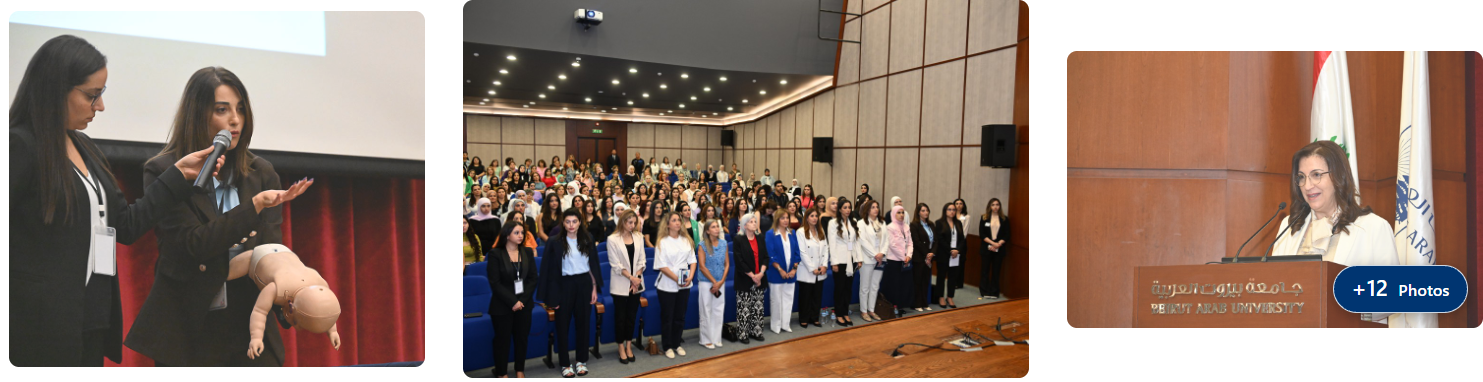
The Faculty of Health Sciences, specifically the departments of Nutrition and Dietetics and Nursing, at Beirut Arab University, in collaboration with the Syndicate of Nursery Owners, organized an awareness day titled: "Healthy Starts: Feeding, Safety and Daycare Practices for Infants and Young Children."
The event was attended by the Head of the Syndicate of Nursery Owners in Lebanon, Ms. Hana Joujou, the Dean of the Faculty of Health Sciences Professor Rajaa Fakhoury, faculty members, representatives from over 250 nurseries, and a large number of nutrition students and interested attendees.
After a documentary about the Faculty and the BAU Weight Management and Nutrition Clinic was screened, the Dean of the Faculty Professor Rajaa Fakhoury, stated:
"The mission of Beirut Arab University is not limited to education and scientific research alone, but extends to include community service, which is one of the fundamental pillars of the University's strategy."
Professor Fakhoury continued:
"The Faculty of Health Sciences has consistently performed its societal role through a series of initiatives and activities aimed at spreading awareness and knowledge and promoting public health among various segments of society, while providing healthcare through specialized centers: Healthcare Center, Life Support Center, Physiotherapy Clinic and the Nutrition Clinic".
In turn, the Head of the Syndicate of Nursery Owners in Lebanon Ms. Hana Joujou, spoke about the Syndicate:
"The Syndicate launched the topic of healthy food and how it should be cooked, stored, and heated in nurseries, which subsequently led the Ministry of Public Health to adopt the same topic and place it on the agenda for successive workshops."
On another note, the Head of the Department of Nutrition and Dietetics Professor Nada Al-Darra, spoke about:
"The impact of nutrition on brain development, where nutrients play an essential role in enhancing cognitive functions and mental growth. Food safety is considered vital for protecting the health of our children, especially in environments that demand the highest standards of hygiene and safety."
Finally, Professor Mirna Fawaz from the Nursing Department spoke, emphasizing that:
"The nurse is not only the person who intervenes when illness or injury occurs, but is an essential element who contributes to the daily follow-up of children's health, the detection of early signs of any health problem, the support of children suffering from chronic conditions or special needs, in addition to safe medication administration."
The day's activities then commenced, featuring lectures by a group of specialized doctors in the fields of nutrition and nursing, who highlighted the importance of this event for the safety and care of children.
Think and Change school learning event in 2026
BAU’s Sociology Department in the Faculty of Human Sciences organised the Think and Change competition and its university award ceremony, reported on 10 June 2026. The initiative targeted Grade 12 pupils in public and private schools and attracted around 500 participants. Pupils analysed social phenomena affecting their generation and proposed responses, developing critical thinking and the ability to present ideas. School principals, educational officials and pupils from participating schools attended the ceremony. An awareness session by the Internal Security Forces addressed cybercrime and reporting concerns. The university hosted a learning activity for school communities and combined recognition of pupils’ work with practical awareness education. Around 500 is the reported competition participation figure, rather than a confirmed ceremony attendance total. The event is classified as ad hoc because the source does not establish recurring annual delivery.
Evidence: BAU Think and Change competition and educational ceremony report
Think and Change at Beirut Arab University
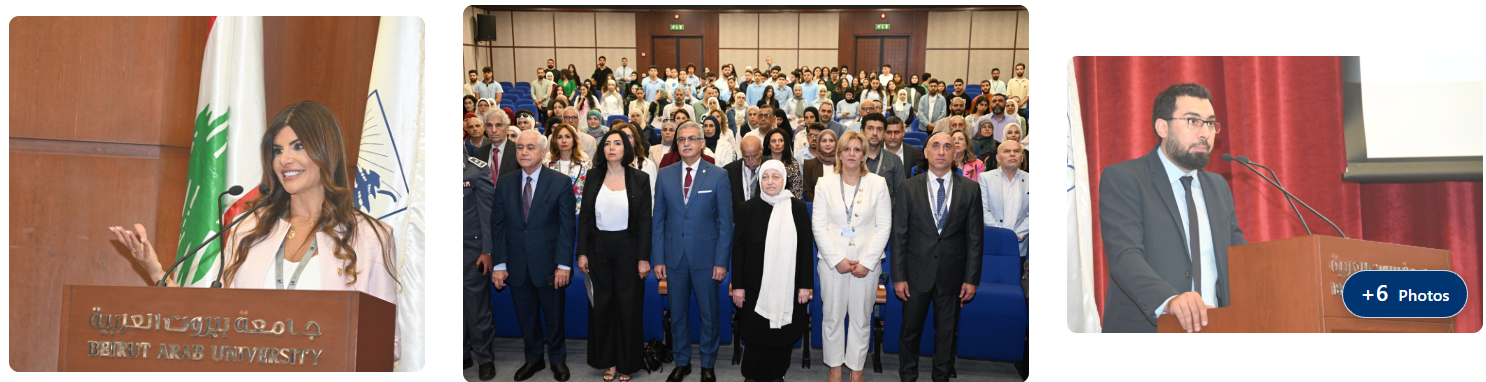
Under the patronage of the Minister of Education and Higher Education, Dr. Rima Karami, represented by Ms. Sophia Khoury, the Department of Sociology at the Faculty of Human Sciences-Beirut Arab University organized an award ceremony for the "Think & Change" competition. The initiative was tailored for Grade 12 students (Third Secondary) from both public and private schools.
The competition attracted around 500 male and female students. Participants were asked to select a trending social phenomenon that reflects the interests and concerns of their generation, analyze it, and present insights and ideas to help address it.
The competition aimed to encourage critical thinking and foster a sense of initiative among students, while providing a platform for them to express their views and perspectives on societal issues. The submissions demonstrated a high level of awareness and an ability to understand current social challenges, alongside presenting innovative solutions and ideas that underscore the role of youth in driving positive change and contributing to a more conscious and engaged society.
Alongside the representative of the Minister of Education, the ceremony was attended by the President of the Hariri Foundation for Sustainable Human Development H.E. Ms. Bahia Hariri, Chairman of the Board of Trustees of the Al-Bir and Ihsan Waqf and Chairman of the BAU Board of Trustees Dr. Ammar Houry, President of Beirut Arab University Professor Wael Nabil Abdel Salam, Secretary General of the University Dr. Omar Houri, Dean of the Faculty of Human Sciences Professor Siddeeka Lasheen.
The event was also attended by educational bureau directors, school principals, university deans and directors, and a large crowd of students from the participating schools.
The ceremony was emceed by Saad Iskandrani, a PhD student in the Sociology Department. Following the introduction, Dr. Abeer Al-Asmar, Head of the Sociology Department, addressed the audience, stating "Change begins with an idea, and today we celebrate hundreds of ideas brought forward by young people who believed they have a role to play in building a better society. It is from this conviction that the 'Think & Change' competition was born an initiative launched by the Sociology Department to reaffirm that its role is not confined to education and academic research alone. Rather, it extends to being a partner in understanding society's issues, confronting its challenges, and empowering youth to be part of the solution."
In turn, the Dean of the Faculty, Professor Siddeeka Lasheen noted in her speech "The idea originated in the Sociology Department, its horizons expanded through collaboration with schools, and its features matured through the efforts of teachers and students. Meanwhile, Beirut Arab University embraced it with support and sponsorship, turning it into an effective community project that touches reality and grants youth the space to think, take initiative, and make a real impact in their surroundings."
For his part, the University President Professor Wael Nabil Abdel Salam, said "This competition is not merely a passing academic activity; it is a strategic step aligned with the university's vision to revitalize sociology a pivotal, living science that we view today as one of the most important human sciences."
He added: "We live in a fast paced world buffeted by social changes and transformations. Hence, there is an urgent need for sociology as a tool to understand reality, deconstruct its crises, and anticipate its future."
Furthermore, the representative of the Minister of Education and Higher Education, Ms. Sophia Khoury, remarked in her speech "The Sociology Department’s choice to launch this initiative and direct it toward high school students in the Sociology and Economics track carries profound educational and national significance. Its core theme serves as an entry point to understanding societal issues and transformations, developing awareness of social and economic phenomena, and preparing a generation capable of approaching challenges with a scientific mind and an open, humanitarian vision. The education we aspire to and work toward is not limited to transmitting knowledge; rather, it aims to build a conscious and responsible personality capable of sound thinking and active participation in society."
The ceremony featured the screening of a documentary produced by the Directorate General of Internal Security Forces. This was followed by an awareness session presented by the Head of the ISF Public Relations Division Brigadier General Joseph Mousallem, who highlighted the dangers of cybercrimes, which have become a growing challenge to society.
He pointed out that sexual extortion is among the most dangerous and widespread cybercrimes, emphasizing that prompt reporting to the competent security authorities is the crucial first step to protecting victims and putting an end to these crimes.
Summer Camp Day for high school students in 2025
On 8 August 2025, the Faculty of Law and Political Science and BAU’s Human Rights Center organised a one-day summer camp introducing high school pupils to the university environment, mediation and peacebuilding. Students toured the faculty, its library, Moot Court and Legal Clinics. Alumni Tala Jaza and May Al Zouhairy delivered a peer-to-peer session on mediation in conflicts involving children, drawing on their participation in the YouthNet International project. The training covered impartiality, active listening and practical mediation, followed by role-play exercises to develop communication and negotiation skills. Participants received certificates. This is a university-hosted educational activity for external school learners, demonstrating access to campus learning facilities and practical skills beyond degree enrolment. The record confirms one delivery, so ad hoc is the supported classification.
Evidence: BAU Human Rights Center Summer Camp Day record
Summer Camp Day at BAU Faculty of Law and Political Science
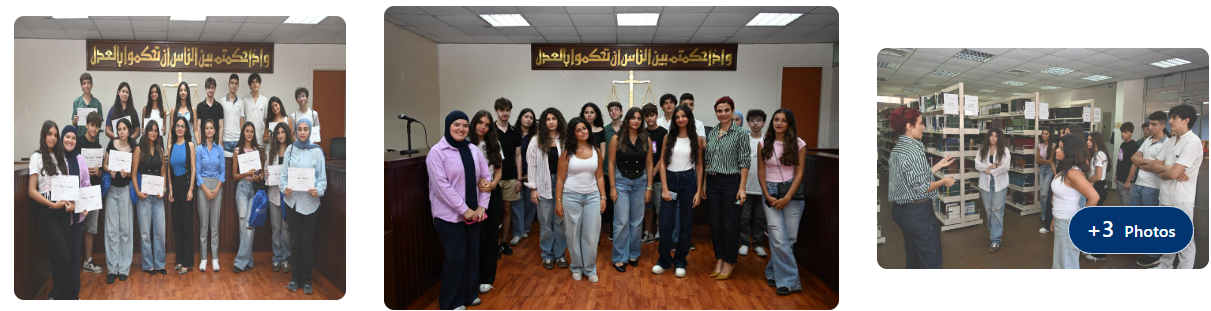
The Faculty of Law and Political Science, in collaboration with the Human Rights Center at Beirut Arab University, organized a one-day summer camp aimed at introducing high school students to the university environment and enhancing their understanding of concepts related to mediation and peacebuilding.
The day began with a field tour of the faculty, led by Dr. Sara Zein, which included an overview of the academic programs and a visit to the Law and Political Science Library, the Moot Court, and the Legal Clinics. This tour allowed students to gain insight into the fields of law and political science, as well as the practical learning opportunities and community engagement initiatives offered by the university.
The highlight of the camp was a peer-to-peer training session on “Mediation in the context of conflicts involving children,” delivered by alumni Tala Jaza and May Al Zouhairy, who had previously participated in the “YouthNet International: Child mediators for long-lasting peace and security” project, supported by the Italian Ministry of Foreign Affairs under the Italian Agenda on Women, Peace, and Security.
The training included:
- An introduction to the concept of mediation and its importance as a peaceful conflict resolution tool.
- An explanation of the role and key qualities of a mediator, such as impartiality and active listening.
- Practical examples of mediation in real-life contexts, particularly those involving children and youth.
- Role-play exercises, where students practiced mediation techniques through simulated scenarios, helping them develop communication and negotiation skills.
The day concluded with the distribution of participation certificates in recognition of the students’ active engagement.
Community professional lecture on the health system in 2024
On 18 January 2024, the Joint Committee of the Lebanese Order of Physicians in Tripoli and the Order of Pharmacists of Lebanon, in cooperation with BAU Tripoli, organised The Role of Physicians and Pharmacists in the Health System Problems and Solutions. Physicians, pharmacists, the two orders’ presidents and the BAU Tripoli director attended. The discussion considered economic pressures on healthcare, patient services, standards for dispensaries and primary healthcare centres, and responses to counterfeit or smuggled medicines. The lecture provides supporting evidence of BAU opening an educational forum to external professional communities. Its documented audience is physicians and pharmacists; the source does not describe unrestricted admission for all members of the public or specify an admission fee.
Evidence: BAU Tripoli lecture on physicians pharmacists and the health system
The Role of Physicians and Pharmacists in the Health System Problems and Solutions At Beirut Arab University
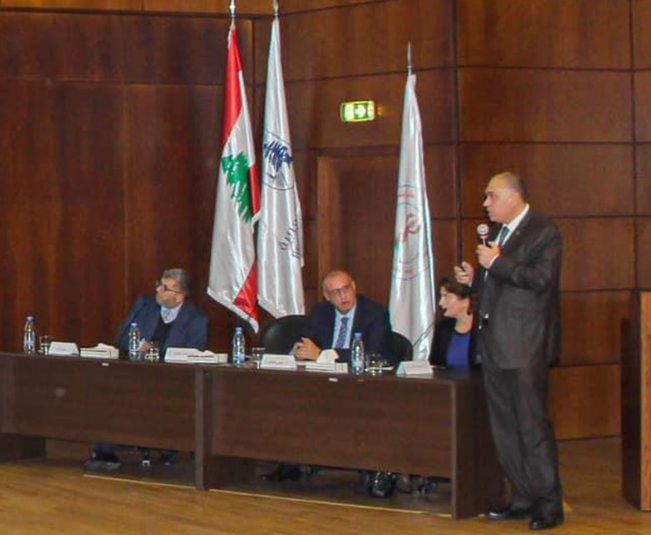
The Joint Committee between the Lebanese Order of Physicians-Tripoli and the Order of Pharmacists of Lebanon, in cooperation with Beirut Arab University -Tripoli, organized a lecture entitled: “The Role of Physicians and Pharmacists in the Health System, Problems and Solutions”, in the presence of the President of the Order of Physicians - Tripoli Dr. Mohammad Safi, and President of the Order of Pharmacists of Lebanon Dr. Joe Salloum, Director of BAU Tripoli Dr. Hani Shaarani and a crowd of Physician and pharmacists.
The lecture described the situation between reality and hope. It was a logical and realistic approach to the problems of the health system in such deteriorating economic conditions and developing possible solutions.
The lecture concluded with several recommendations that would increase the level of performance of the medical sector, which has a positive impact on the patient's service, and work with the Ministry of Public Health to find solutions to problems and overcome obstacles faced by the two orders in the light of the presence of dispensaries and primary health care centers that do not adhere to the specifications and standards stipulated by law. Another recommendation was to request from the Ministry of Public Health to cooperate with the relevant ministries to strictly observe border control in order to prevent counterfeit or smuggled medicines in markets.
Sky Dream intercultural event at Tripoli Campus in 2023
On 14 January 2023, BAU organised Sky Dream at Tripoli Campus with the Elite Center of Culture and Education and the Indian and Japanese embassies in Lebanon. The intercultural performance combined Indian, Japanese and Lebanese artistic traditions. BAU’s original report describes attendance by students and interested people, alongside diplomatic representatives and cultural, scientific, religious and municipal bodies. The university hosted and sponsored the activity, bringing an external cultural organisation and community representatives into a campus event. This ad hoc activity supports intercultural learning and appreciation of diversity through the arts. The report documents a wider audience, but does not specify a fee or an unrestricted public registration process; it is supporting cultural evidence alongside the clubs’ explicit free public access arrangements.
Evidence: BAU Tripoli original Sky Dream intercultural event report
India and Japan at Beirut Arab University In cooperation with Elite Center of Culture and Education
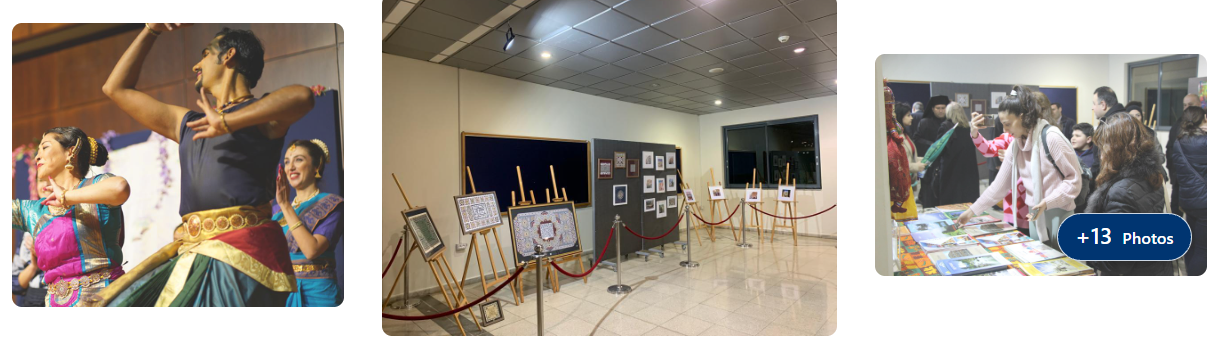
Beirut Arab University organized a cultural activity entitled “SKY DREAM” in cooperation with the Elite Center of Culture and Education and in partnership with the Indian and Japanese Embassies in Lebanon. It is an inter-cultural dancing show, that embodies the union of three ancient cultures, which are India, Japan, and Lebanon, to create a new art, expressing the band's firm belief of the power far-off the arts to connect people's souls beyond what confines space and time.
The Ambassador of India Dr. Suhel Ajaz Khan and Ambassador of Japan represented by Second Secretary Ms. Minami Kunitomo, a crowd of ambassadors, diplomats, ministers and deputies, as well as presidents’ of Orders, university presidents, hospital directors and representatives of cultural, scientific, religious and municipal bodies as well as a large crowd of students and interested people attended the event, where they were welcomed by Professor Amr Galal El-Adawi, President of the University, Professor Khaled Baghdadi, Vice-President to Tripoli Branch , Dr. Omar Houri, Secretary-General and the deans of the University and its academic and administrative family.
The ceremony started with the speech of Professor Amr Galal El-Adawi, President of the University, who welcomed the audience, emphasizing on the importance of the exposure to cultures that is one of the aspirations of Beirut Arab University to enrich its human culture, and this event forms a unique touch in highlighting the issues of society with such a distinctive creative type. He also drew attention to the fact that such events are an addition to the cultural and artistic scene.
The President of Elite Culture and Education, Dr. Iman Dernaika Kamali, said: "It is a special pride that I am present here and that I had the chance to cooperate with Beirut Arab University, which has embraced and sponsored this event. It emphasizes its cultural role and its firm belief that cultural identity can only be built on the basis of universal cultural interdependence, mutual respect and acceptance of diversity.
She continued: The title of the event, "Sky Dream", was the result of Japan's yearning for a solution when the country was overrun with a cholera wave and one third of Japan's population died in the seventeenth century.
I found the title and the topic appropriate for what we need today in Lebanon, especially as we live through a series of consecutive troubles and crises, which may need a sky dream to turn our darkness into light.
Dr. Suhel Ajaz Khan, Ambassador of India said: "Lebanon and India have always enjoyed friendly relations since the establishment of diplomatic relations in the early 1950s, which have been based on mutual respect and common denominators involving, among other things, multicultural societies and democratic traditions.
The Ambassador, then, honored Dr. Ogarit Younan, a researcher, writer and educational thinker. She received the prize of Jamnalal Bajaj International Award for the Promoting of Gandhian Values Outside India as well as Dr. Iman Dernaika Kamali, who is a friend of the Embassy of India in Lebanon, and has already cooperated with the Embassy in promoting the Indian culture and strengthening friendly bilateral relations between India and Lebanon.
The event was presented by Dreamers Japan in Lebanon, led by its President, Ms. Eiko, Zmilti, Professor of teaching the Japanese Language at the Japanese Cultural Center at St. Joseph's University, with the professional artist and Indian dance professor at the Embassy of India in Lebanon Mr. Deepesh Hoskere who presented with Ms. Seiko Sugita, the social development officer at United Nations agencies and with his students, a wonderful show of the Bharatanatyam Art.
The show consists from 12 dancing and singing shows that reflect a legendary story about Amabiko, a legendary creature in Japan from the seventeenth-century who carried messages from the sky to treat the disease at the time of the cholera pandemic. From here came the idea of a theatrical show after the Covid pandemic to spread hope and positivity to Lebanese and the world through this artistic creativity.
Along the side of the activity, an exhibition comprising a special pavilion for the embassies of India and Japan exhibiting the advantages of the two countries in terms of tourism, economy and art was displayed, as well as a pavilion for the two Lebanese art exhibitors; PhD student at the Faculty of Architecture Boushra Naim who displayed her paintings of different Lebanese touristic villages and the architect, Bassem Zouda, who is passionate about documenting the decoration of Tripoli's ancient heritage buildings through his decorative paintings.
University contribution to inclusive lifelong learning
The evidence shows institutional delivery through named BAU units, rather than isolated participation by individual staff members in events elsewhere. Faculty-led public lectures share specialist knowledge; annual fairs bring school learners into scientific and civic discussion; graduate open houses help prospective learners understand further study; and organised performances offer public cultural participation. These activities provide several routes into learning for people who are outside the university’s current student population.
Students contribute as project demonstrators, club performers, volunteers and participants in discussion. Academic staff organise activities and explain their subjects to external learners. Administrative staff and the Student Activities Department support programme delivery. Alumni contribute practical peer education, while schools, municipalities, professional bodies, NGOs and cultural partners bring community knowledge and audiences into the university. These roles make the university’s contribution to SDG 4 visible through actual learning activities and public participation.
The response is Yes for both categories. Programmed provision is supported by recurring science fairs, graduate open houses, NGO fairs and annual public performances. Ad hoc provision is supported by explicitly designated public lectures and dated community education events. The strongest general public access statements are the free music and drama performances; other records establish public lectures or participation by identified external communities. Fee claims are confined to activities for which BAU explicitly publishes free access.